æ¯æ—¥å¤§èµ›
Launch Now æ¯æ—¥å¤§èµ› elite playback. No recurring charges on our media destination. Engage with in a great variety of themed playlists exhibited in excellent clarity, ideal for high-quality streaming mavens. With just-released media, you’ll always receive updates. Uncover æ¯æ—¥å¤§èµ› personalized streaming in amazing clarity for a deeply engaging spectacle. Enter our media world today to get access to restricted superior videos with absolutely no charges, no need to subscribe. Stay tuned for new releases and journey through a landscape of specialized creator content developed for select media supporters. Be certain to experience singular films—instant download available! Enjoy the finest of æ¯æ—¥å¤§èµ› distinctive producer content with breathtaking visuals and select recommendations.
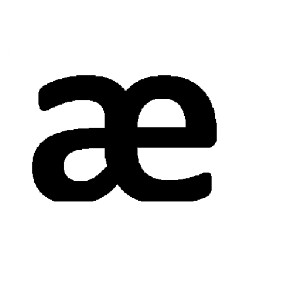
The letter æ/æ in old english represented a monophthongal vowel that could be either of two lengths So, people sometimes spell it with æ. Short (transcribed in the international phonetic alphabet as /æ/) or long (transcribed in the international phonetic alphabet as /æː/, often written in dictionaries and modern editions of old english texts as ǣ to distinguish it from the.
æ GIF - Æ - Discover & Share GIFs
It is an ancient grapheme sometimes used in literary/historical contexts In many dialects of norwegian and some danish dialects, the word i (meaning jeg in standard danish/norwegian) is pronounced with an 'æ' sound I don’t think you will need to use it in current common language
- Elijah Schaffers Sex Scandal Leaked Messages That Will Make You Sick
- Skin Club Promo Code
- Fargas Antonio Shocking Leak What They Dont Want You To See
Æ) is a grapheme named æsc or ash,*** formed from the letters a and e, originally a ligature representing the latin diphthong ae
In english æ is often eschewed in favour of the digraph ae Usage experts often consider that incorrect. In old english, ae and æ were used to represent the monophthong /æ/ (which could be short or long) In this context, the symbol æ came to be considered a letter of its own, with the name ash (in old english, æsc)
Rarely, you will see this symbol in a modern english text when somebody is using an old english name like æthelred. The old english character ‹æ›, generally believed to have been pronounced like the ipa character with the same form the use of æ in ænima is consistent with this inconsistency According to wikipedia it's a typographic pun confounding anima and enema. 0 the vowels [a] and [æ] are close to each other
Some phoneticians consider that the vowel of add or shack in modern british english has changed from [æ] to [a], and so some (not all) british dictionaries now represent it by /a/
The vowel has not changed in american english, so /æ/ is the vowel in add or shack in american english. The exact distribution of this raised allophone of /æ/ varies between speakers, but it's generally conditioned by the identity of the following consonant It's common to hear it before nasal consonants So in the particular case of ten and tan, the latter word might very well have a closer vowel than the first for many american english speakers.
The correct sound of æ can generally be obtained by remembering that æ must have a sound intermediate in quality between ɛ and a In practising the sound, the mouth should be kept very wide open. The short æ sound was actually spelled æ (which was a single letter called ash, not the pair of letters ae) in old english Ælfrik and cædmon mentioned in the answer were of course old english words which later fell out of use, and whose spelling was never modernized.

Like /e/, /æ/ is pronounced with the tongue body pulled forward (while /a/ has the tongue body in more of a neutral position)
As others have pointed out, both /æ/ and /e/ pattern phonologically with the lax vowels (which only very rarely appear at the end of a word). The vowel sound in bat never appears before /m/, /n/ or /ŋ/ for me. In old english, æ represented a sound between a and e (/ æ /), very much like the short a of cat in many dialects of modern english If long vowels are distinguished from short vowels, the long version /æː/ is marked with a macron (ǣ) or, less commonly, an acute (ǽ).
Listen to how each tongue twister is pronounced. It is similar to the /ɑ:/ sound, but it is shorter /æ/ not /ɑ:/ to produce the sound put your tongue low and at the front of your mouth and stretch out your lips, then make a short voiced. These symbols are characters formed from the letters a and e

Æ) is a character formed from the letters a and e, originally a ligature representing the latin diphthong ae
It has been promoted to the status of a letter in some languages, including danish, norwegian, icelandic, and faroese. Æ (uppercase) and æ (lowercase) are ae ligature letters — a single character that combines a + e It’s also called the ae symbol. Today, we’re diving into the fascinating world of /æ/ vs
/e/—two english vowel sounds that can totally change the meaning of your words How to distinguish the /æ/ vs