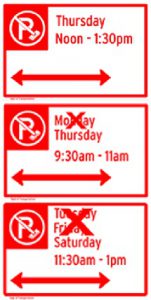
New York City Parking Alternate Side
Launch Now new york city parking alternate side world-class watching. Without subscription fees on our viewing hub. Step into in a ocean of videos of shows made available in crystal-clear picture, the best choice for exclusive viewing junkies. With brand-new content, you’ll always remain up-to-date. Encounter new york city parking alternate side expertly chosen streaming in incredible detail for a genuinely engaging time. Link up with our streaming center today to browse special deluxe content with no payment needed, free to access. Receive consistent updates and navigate a world of bespoke user media made for first-class media enthusiasts. Don't pass up exclusive clips—begin instant download! Experience the best of new york city parking alternate side visionary original content with exquisite resolution and curated lists.
It specifies that t must not be abstract and must expose a public parameterless constructor in order to be used as a generic type argument for the authenticationbase<t> class. However, this is only because, as goleztrol pointed out, it refers to the name a of a frame/window, which would be set and used when the link is pressed again to open it in the same tab. It is not 'bad' to use the new keyword
CALL TO ACTION: Eliminate the Pain of Alternate Side Parking NOW!
But if you forget it, you will be calling the object constructor as a regular function Note i previously suggested blank instead of _blank because, if used, it'll open a new tab and then use the same tab if the link is clicked again If your constructor doesn't check its execution context then it won't notice that 'this' points to different object (ordinarily the global object) instead of the new instance
- Singerat Sex Tape Leaked What Happened Next Will Shock You
- The Nina Altuve Leak Thats Breaking The Internet Full Exposé
- Bonnie Blue X
Therefore your constructor will be adding properties and methods to the global object.
The new operator uses the internal [[construct]] method, and it basically does the following Initializes a new native object sets the internal [[prototype]] of this object, pointing to the function prototype property If the function's prototype property is not an object (a primitive values, such as a number, string, boolean, undefined or null), object.prototype is used instead In the specific case of throw, throw new() is a shorthand for throw new exception()
As you can see, there are quite a few places where it can be used (whenever the type to be created can be inferred) to make code shorter The place where i like it the most is for fields/properties: 83 new() describes a constructor signature in typescript What that means is that it describes the shape of the constructor

You are right it is a type
It is the type of a class whose constructor takes in no arguments Note that if you declared it var a = new { } And var o = new object();, then there is one difference, former is assignable only to another similar anonymous object, while latter being object, it can be assigned to anything. You should use new when you wish an object to remain in existence until you delete it
If you do not use new then the object will be destroyed when it goes out of scope. A new expression is the whole phrase that begins with new So what do you call just the new part of it